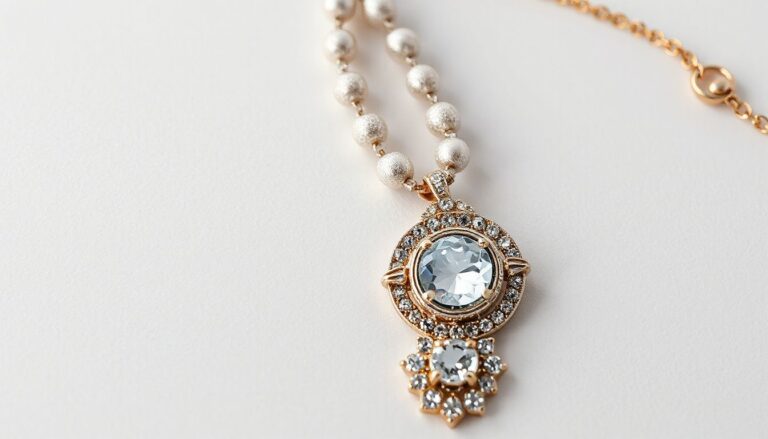
is pandora jewelry real Review: Expert-Backed Proven Secret Essential Truth
Is pandora jewelry real when you buy it online, receive it as a gift, or find a “too good” deal in a marketplace listing? Usually, yes—Pandora is a legitimate global brand with defined metals, documented hallmarks, and consistent manufacturing standards. But counterfeits are common, especially for best-selling charms and bracelet styles.
Look, the real issue is not whether Pandora exists. It does. The question is whether the specific piece in your hand is authentic, made to Pandora specifications, and sold through a trustworthy channel.
This guide focuses on practical checks you can do quickly: materials, stamps, craftsmanship, packaging, and seller credibility. It also covers what professionals evaluate under magnification.
Real-world example: a buyer finds a “Pandora” charm on a resale app for half retail price. The photos show a blurry stamp, the bail looks uneven, and the listing avoids close-ups. That combination is a red flag. With a few at-home checks, you can usually decide whether to proceed, request proof, or walk away.
Buying Guide: Authenticity Checks, Materials, Hallmarks, Packaging, and Seller Trust
Authentic Pandora pieces follow consistent quality cues: standardized alloys, precise finishing, and recognizable hallmarks. Counterfeits often fail in small details. Fast to spot once you know where to look.
Start with materials. Most Pandora jewelry is made in sterling silver (typically marked S925 or 925), 14k/18k gold (marked G585/G750 or 585/750), Pandora Rose (a rose-hued metal blend plated with 14k rose gold), or Pandora Shine (sterling silver with 18k gold plating). If a seller claims “solid gold” at a bargain price, skepticism is rational.
Next, check hallmarks. Pandora commonly uses “ALE” (for Algot Enevoldsen, the founder’s father) alongside metal purity marks. Hallmarks should be clean, evenly struck, and correctly placed—usually inside rings, on bracelet clasps, or on charm cores.
- Stamp clarity: crisp letters, consistent spacing, no “melted” edges.
- Correct metal mark: 925 for silver; 585/750 for gold; “ALE” often present.
- Design consistency: compare to official photos for stone placement and proportions.
Packaging helps, but it is not proof. Boxes and pouches can be purchased separately. Still, genuine retail packaging usually has clean printing, correct branding, and quality materials. Poor printing, thin cardboard, or odd fonts raise suspicion.
Seller trust often decides the outcome. Authorized retailers, Pandora boutiques, and reputable jewelers provide receipts, return policies, and verifiable purchase trails. Resale platforms can be safe, but only with documentation and clear photos.
- Ask for proof: original receipt, order confirmation, or warranty card where applicable.
- Request macro photos: hallmarks, clasp, charm core, and stone settings.
- Check policies: returns, authentication guarantees, and dispute resolution.
Step-by-Step: How to Tell If Pandora Jewelry Is Real at Home
You can screen most pieces at home using good lighting, a phone camera, and a magnifying glass. Do not rely on one sign alone. Combine checks for a confident decision.
- Compare the design to official images: match the exact charm name and product photos on Pandora’s site. Look for correct spacing, symmetry, and engraving style.
- Inspect the hallmarks: find “ALE” and the metal purity mark (commonly 925 for sterling silver). The stamp should be sharp, centered, and not misspelled.
- Assess weight and feel: authentic pieces usually feel dense for their size. Many fakes feel light, hollow, or oddly bulky in the wrong areas.
- Check finishing quality: look for smooth edges, even polishing, and consistent oxidation where applicable. Rough seams, sharp burrs, and patchy plating are warning signs.
- Evaluate stones and settings: stones should sit straight, with uniform prongs or bezels. Glue residue, crooked stones, or cloudy “crystal” is common in counterfeits.
- Test magnet response carefully: sterling silver and gold are not magnetic. A strong pull to a magnet suggests base metals. Note: weak attraction can occur from internal components in some jewelry types, so treat this as one data point.
Now, a practical at-home example. You receive a bracelet with “ALE 925” inside the clasp, but the letters look shallow and uneven. Under magnification, you see tiny bubbles in the metal near the stamp and a gritty clasp hinge. That combination points to poor casting and low-quality finishing—both common in replicas.
If you remain unsure, take the piece to a local jeweler for a metal verification test (such as XRF scanning) and craftsmanship review. It is often inexpensive. It is also definitive.
Review: Real vs Fake Pandora — What Experts Look for in Charms, Bracelets, and Rings
Professionals authenticate Pandora by evaluating manufacturing precision. Not vibes. Under magnification, genuine pieces tend to show controlled polishing, clean edges, and consistent engraving depth.

Charms are the most counterfeited category. Experts focus on the charm core (the inner tube), threading, and enamel work. Genuine cores are typically smooth, evenly finished, and properly aligned with the design. Fakes often show rough inner edges, uneven enamel fill, and inconsistent spacing in decorative elements.
Bracelets are judged by clasp engineering and chain uniformity. Authentic Pandora clasps close cleanly, with a firm snap and minimal wobble. Counterfeits may have gritty movement, misaligned closures, or a clasp that feels “soft” when pressed.
Rings reveal authenticity through engraving and stone setting. Pandora rings typically have crisp internal stamps and cleanly seated stones. Replicas often show shallow engraving, off-center stamps, and prongs that look thick or uneven.
| Check | Authentic Pandora | Common Fake Signs |
|---|---|---|
| Hallmarks | Sharp “ALE” and correct purity marks | Blurry, misspelled, or poorly placed stamps |
| Finish | Even polish, smooth edges | Rough seams, burrs, patchy plating |
| Stone setting | Straight stones, uniform prongs/bezel | Crooked stones, glue residue, uneven prongs |
| Clasp function | Firm, aligned, consistent closure | Wobble, misalignment, gritty movement |
But here’s the thing: some authentic Pandora pieces show normal wear, tarnish, or minor scratches. That is not the same as counterfeit construction. Experts separate wear patterns from manufacturing defects by looking at symmetry, stamp quality, and metal consistency.
Final Verdict
Pandora jewelry is real as a brand, and authentic pieces are widely available through official stores and authorized retailers. The risk appears when pricing is unrealistically low, listings avoid close-up photos, or sellers cannot provide proof of purchase.
Your best approach is layered verification. Confirm the design against official references, inspect hallmarks for “ALE” and correct metal marks, evaluate finishing quality, and judge seller credibility. One check can be faked. Several checks together are hard to fake well.
If you are buying secondhand, prioritize listings with clear macro photos, a receipt or order confirmation, and a return window. If you already own a questionable piece, a jeweler’s metal test can settle it quickly.
- Lowest risk: Pandora boutiques, official website, authorized jewelers.
- Medium risk: reputable resale with documentation and returns.
- Highest risk: “new” items at steep discounts with vague descriptions.
When authenticity matters—resale value, gifting, or collecting—treat verification as part of the purchase. It protects your money. It also protects your skin from unknown alloys and questionable plating.
FAQ: Does Pandora use real silver and gold?
Many Pandora pieces are made from sterling silver (925) and gold alloys (commonly marked 585 for 14k and 750 for 18k). Pandora also offers plated collections, such as Pandora Shine (18k gold plating) and Pandora Rose (a rose-toned blend with 14k rose gold plating). Always confirm the hallmark and product description.
FAQ: Can real Pandora jewelry be missing an “ALE” stamp?
Most authentic Pandora items include “ALE,” but stamp placement can vary by product type and size. Some very small pieces may have limited stamping space, and older designs can differ. If “ALE” is missing, rely on multiple indicators: correct purity mark, design match, quality of finishing, and credible proof of purchase.
FAQ: Are Pandora boxes and bags proof of authenticity?
No. Packaging can be reused or purchased separately, so it is only supporting evidence. Treat it as one signal among many. Stronger proof includes a valid receipt, an order confirmation tied to an official or authorized seller, and clear hallmark photos that match the item’s metal type.
Final Thoughts
Authenticating Pandora is mostly about disciplined observation. Check the hallmarks, verify the design, assess craftsmanship, and evaluate the seller. Do not let packaging or a low price override missing evidence.
If you need certainty, use professional verification. A reputable jeweler can confirm metal composition and construction quality quickly, which is especially useful for secondhand purchases and gifts. When the details align, you can wear the piece with confidence and know exactly what you paid for.